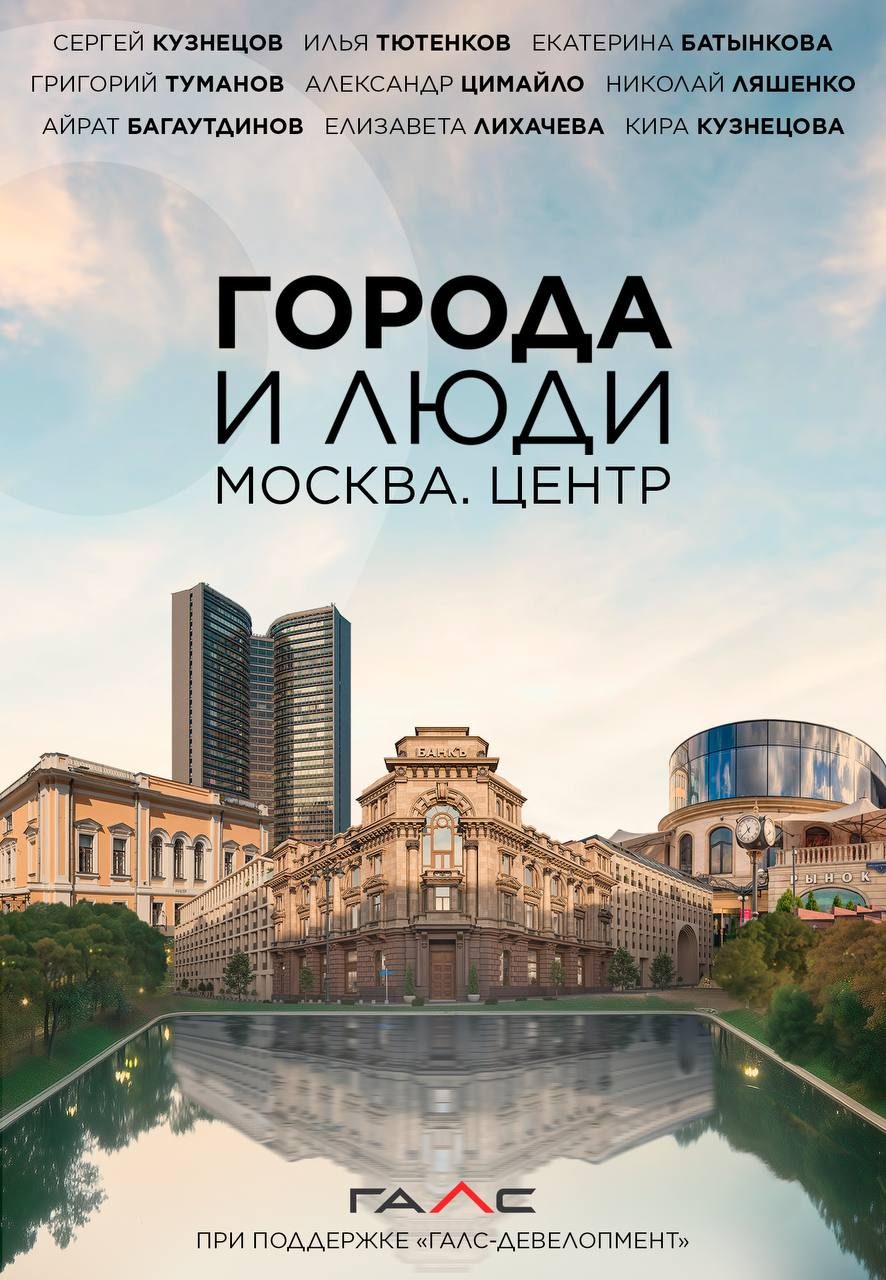
Moscow. Center
How central Moscow is changing: the modernism of Novy Arbat, the restaurant culture of Patriarch's Ponds, Tsvetnoy Boulevard, the Rozhdestvenka 8 club quarter by Kuznetsky Most and merchant Zamoskvorechye. Historians, architects, restaurateurs and developers on how to read a city centre.
On screen
- Sergey KuznetsovChief Architect of Moscow
- Ilya Tyutenkovrestaurateur
- Ekaterina BatynkovaGals-Development
- Grigory Tumanovjournalist
- Alexander Tsimailoarchitect, Tsimailo Lyashenko & Partners
- Nikolai Lyashenkoarchitect, Tsimailo Lyashenko & Partners
- Airat Bagautdinovarchitectural historian
- Elizaveta Likhachevaart historian
- Kira Kuznetsovahotel manager
- Oleg Klodtinterior architect
What the episode is about
Novy Arbat and Soviet modernism
Many consider Novy Arbat an urban-planning mistake, but in the sixties it was built on the most advanced ideas of its time — on a par with the modernist districts of Paris, London and New York. Told by architectural historian Airat Bagautdinov and Sergey Kuznetsov.
Patriarch's Ponds: how a restaurant created a district
In 2011 Ilya Tyutenkov and William Lamberti opened the restaurant Williams, followed by Ugolyok. The walking route between the restaurants shaped today's "Patriki" — the symbol of 2010s Moscow.
Tsvetnoy Boulevard
Just two boulevards away from Patriarch's Ponds a new enclave is growing. The story of the Central Market, demolished in 1994, and the Tsvetnoy shopping centre, opened in 2010 — with journalist Grigory Tumanov.
Kuznetsky Most and Rozhdestvenka 8
Gals-Development's ensemble of seven buildings at the corner of Kuznetsky Most and Rozhdestvenka: architecture by Tsimailo Lyashenko & Partners, interiors by Oleg Klodt and a courtyard with the 17th-century chambers of the Tver Podvorye, opening to the public for the first time.
Zamoskvorechye
A merchant district on the other bank of the Moskva River, where Russian and Tatar cultures have lived side by side for centuries and manor houses stand next to major museums. Art historian Elizaveta Likhacheva on how to read the city.
You can't study the centre — you can only live it
The film's finale: the same streets, different people — and a search for meaning in a city that changes along with us.
Key ideas
Many Muscovites consider Novy Arbat an urban-planning mistake, but in fact in the sixties it was built on the most advanced urban-planning ideas of the time.
We are the only ones with our own 17th-century chambers in the courtyard.
If you know where to look, if you know the laws by which urban space develops, you can read any city.
Projects and sites in the episode
| Project | Developer / operator | District | Why it matters |
|---|---|---|---|
| Novy Arbat | City of Moscow | Arbat | A modernist avenue of the 1960s |
| Patriarch's Ponds | — | Presnensky | Restaurant quarter, the symbol of 2010s Moscow |
| Tsvetnoy Boulevard | — | Meshchansky | The Central Market and the Tsvetnoy shopping centre |
| Rozhdestvenka 8 | Gals-Development | Kuznetsky Most | Seven club houses, architecture by Tsimailo Lyashenko & Partners, interiors by Oleg Klodt, 17th-century chambers in the courtyard |
| Zamoskvorechye | — | Zamoskvorechye | Merchant manors, museums and contemporary art centres |
Questions and answers
Where can I watch the episode "Moscow. Center"?
Right on this page: press "Watch" or click the episode poster.
Who appears in the episode?
Sergey Kuznetsov, Ilya Tyutenkov, Ekaterina Batynkova, Grigory Tumanov, Alexander Tsimailo, Nikolai Lyashenko, Airat Bagautdinov, Elizaveta Likhacheva, Kira Kuznetsova, Oleg Klodt.
What does "Moscow. Center" show?
Novy Arbat, Patriarch's Ponds, Tsvetnoy Boulevard, the Rozhdestvenka 8 club quarter on Kuznetsky Most and Zamoskvorechye. The film tells how central Moscow has changed and how to "read" it.
Press about the episode
- RIA Real Estate29 October 2025Gals-Development held a public talk on the new face of Moscow →
- Kommersant29 October 2025Gals-Development discussed the future of central Moscow with experts →
- Vedomosti29 October 2025Gals-Development held a public talk on the new face of Moscow →
- Snob29 October 2025A public discussion on the new face of the capital took place in Moscow →
- Buro 24/729 October 2025Gals-Development held a public talk on the new face of the capital →
- Moskovskaya Perspektiva29 October 2025Gals-Development held a public talk on the new face of Moscow →
- Esquire Russia (Pravila Zhizni)30 October 2025Pravila Zhizni at the first public talk of one of Moscow's leading developers →
Producer